 Lorraine Williamson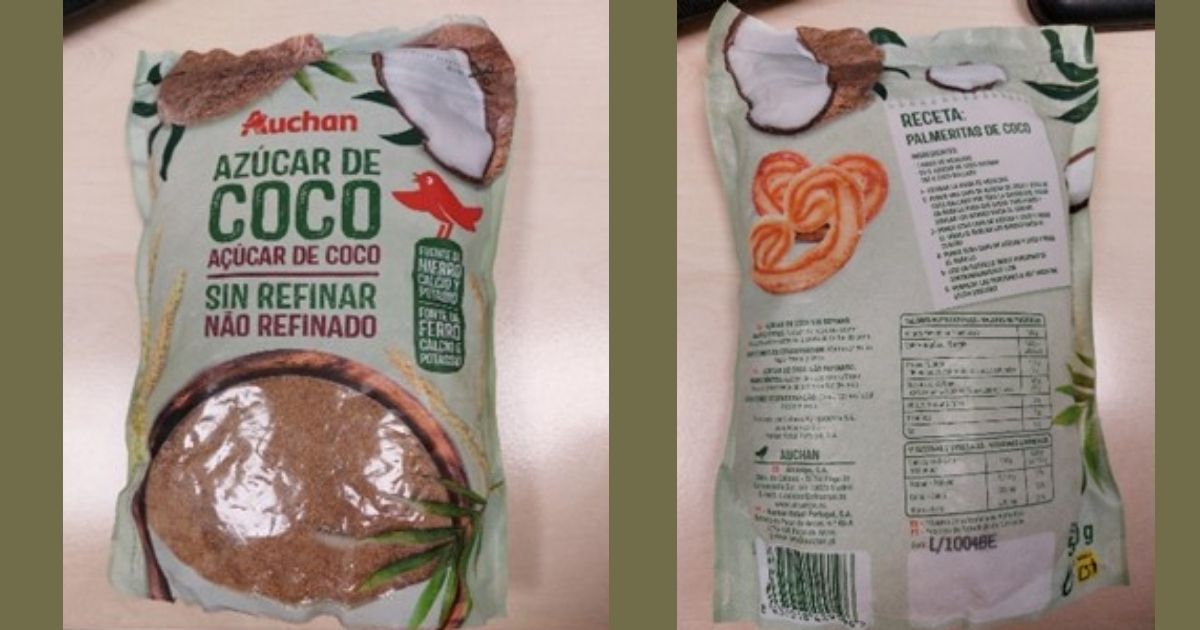
Spain’s food safety agency AESAN has issued a warning for people with sulphite intolerance after detecting undeclared sulphites in Auchan-brand coconut sugar sold in Spain.
The alert was first published on 24 February 2026 and was expanded on 26 February as authorities updated details of the affected batches and distribution.
For most shoppers, this is not a general health scare. But for those who react to sulphites, it matters — because undeclared allergens remove the one layer of protection consumers rely on: the label.
Who should take this seriously?
AESAN’s warning is aimed at people with intolerance to sulphites. If you fall into that group and have this product at home, the safest guidance is straightforward: do not consume it.
Anyone without sulphite intolerance is not the target of the alert, but the product is being withdrawn through the usual safety channels.
What product is affected?
AESAN identifies the product as Auchan coconut sugar, with sulphites present but not declared on the packaging. The agency has circulated the information to regional authorities through SCIRI, Spain’s rapid alert coordination network, to support removal from sale.
AESAN’s updated notice is the best place to check the latest details, including any batch expansions.
What to do if you’ve bought it?
If you have Auchan coconut sugar at home, check it against AESAN’s batch information and follow the guidance given in the official alert.
If you are sulphite intolerant and have already consumed it and feel unwell, seek medical advice and take the packaging with you. This helps clinicians identify the likely trigger quickly.
Why Spain issues these alerts so quickly now
One thing has changed in recent years: speed. AESAN alerts increasingly move fast, because distribution is faster and products travel further.
That’s why the most useful habit for consumers is also the simplest: if you have a food intolerance, follow AESAN alerts — and keep packaging until a product is finished.
The practical takeaway
This is a targeted alert, but it’s a reminder of something bigger: labels are only protective when they’re accurate — and that’s why undeclared allergens are treated as urgent.