 Lorraine Williamson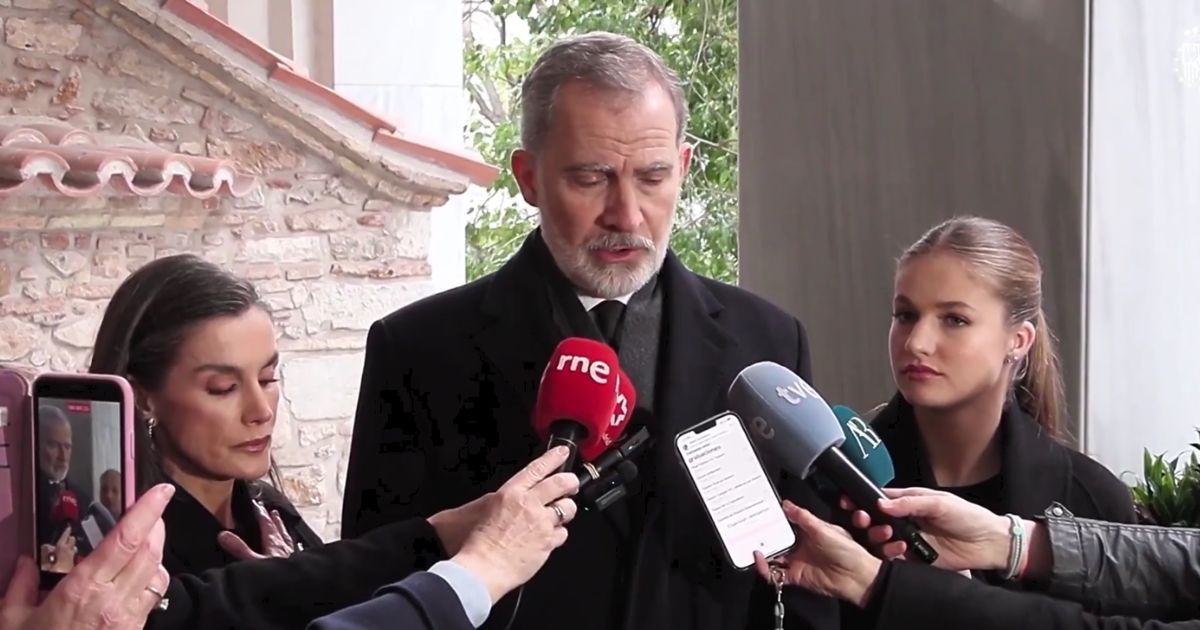
Spain is waking up to another grim update from Adamuz, Córdoba, where a high-speed derailment and collision has become one of the country’s worst rail tragedies in more than a decade. Officials have now confirmed 41 deaths, with rescuers still working to reach areas of the wreckage that remain dangerously unstable.
With families still searching for answers, the King and Queen have spoken of the country’s “consternation”, while regional and national leaders have urged the public to avoid speculation as investigators begin the painstaking work of establishing what happened.
What we know right now
Authorities say the collision began when an Iryo high-speed service (Málaga–Madrid) derailed near Adamuz and invaded the adjacent track, where it was struck by a Renfe Alvia (Madrid–Huelva) coming the other way. Several reports say the front carriages of the Alvia were thrown down an embankment of around four metres, leaving the most severe damage in the leading coaches.
Passenger numbers are still being confirmed across agencies, but multiple reports indicate 317 people were on the Iryo service, while the Alvia was carrying around 180 passengers.
On the medical side, Andalucía’s emergency updates have repeatedly stressed that dozens remain in hospital, including patients in intensive care.
A country paused at noon
Across Spain, institutions and town halls held minutes of silence at 12.00 noon to honour those killed and to stand with the injured and their families. Among those joining the tribute were several government ministries in Madrid and municipalities responding to a national call coordinated through local-government networks.
The Community of Madrid also announced three days of official mourning (20–22 January), with flags at half-mast and further formal tributes planned.
Andalucía has likewise decreed three days of official mourning, describing it as a public “testimony of pain” and solidarity with bereaved families.
The King and Queen: “We understand the desperation”
Speaking publicly after the crash, King Felipe VI and Queen Letizia expressed deep concern for the victims and their families and signalled their intention to travel back to Spain as soon as possible to follow developments closely. The King said he understood “the desperation of the families”, while the Queen underlined that the priority is supporting and accompanying everyone affected as emergency work continues. Broadcasters covering the remarks noted how emotionally affected they appeared.
Officials urge caution on cause as the investigation widens
For now, no official cause has been confirmed.
The president of the Junta de Andalucía, Juanma Moreno, has said he will not speculate and that the legal and technical process will establish the cause in due course. He has also warned that early figures could rise as recovery work progresses.
Investigators from Spain’s rail-accident body, the CIAF, have opened a formal case and are gathering technical evidence, including data recorders from both trains and analysis of the track area where the derailment began. The CIAF’s own summary of the incident notes the derailment and subsequent invasion of the adjacent line before the collision, and stresses that early information may be updated as the work continues.
Separately, Interior Minister Fernando Grande-Marlaska told RTVE that bodies had been recovered and that additional remains were still trapped in areas not yet safely accessible, with identification work moving to forensic facilities.
If you are trying to locate someone: verified contact points
The Guardia Civil has published the clearest practical guidance so far for families seeking information, including where to go and which numbers to call.
Helplines (official)
-
ADIF family information line: 900 10 10 20
-
IRYO information line: 953 00 11 49
-
People hospitalised (Andalucía): 061
-
People hospitalised (from outside Andalucía): 953 00 11 49
-
Emergency number (Spain): 112
Identification support: Guardia Civil offices for relatives
The Guardia Civil says first-degree relatives of missing people should attend designated offices to provide details and, where needed, DNA samples. Locations listed include facilities in Córdoba, Huelva, Málaga, Sevilla and Madrid. Families are also advised to take ID documents, recent photographs and any identifying information such as tattoos or scars.
A note for travellers: disruption on AVE corridors
Services on the high-speed corridor connected to the Madrid–Andalucía route have faced major disruption since Sunday night, with operators and infrastructure teams working around a complex recovery site. Passengers due to travel should check operator updates before heading to the station, particularly for long-distance services linked to Madrid’s main terminals.
Where this leaves Spain
The numbers behind this tragedy are still moving, but the shape of it is already clear: a catastrophic chain of events on a high-speed line, an extraordinary rescue effort, and hundreds of families caught between hope and dread while identification and recovery work continues.
The next official milestones will come from three places: the forensic identification process, the CIAF technical investigation, and continued briefings from emergency services and regional authorities. Until then, officials across Andalucía and Madrid are repeating the same message—focus on supporting victims, and leave the causes to the investigators.
Sources: Guardia Civil, Comunidad de Madrid, RTVE