 Lorraine Williamson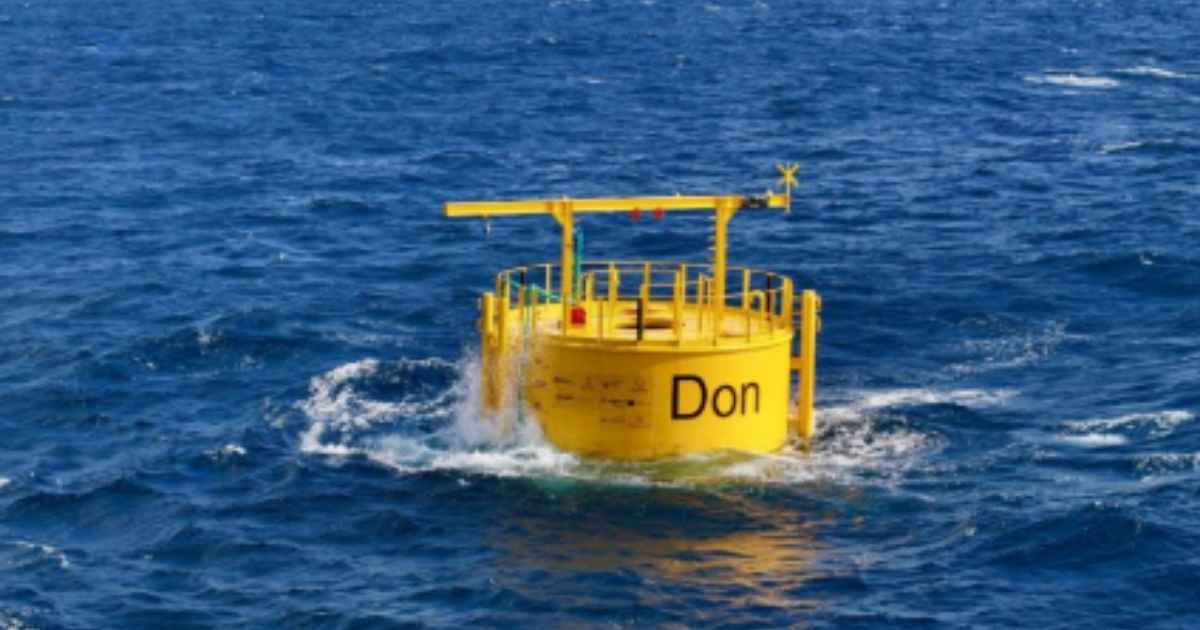
A floating platform off Gran Canaria is testing whether the sea itself could help power island communities in the future. The prototype, installed at the Oceanic Platform of the Canary Islands, known as PLOCAN, is designed to generate electricity by using the temperature difference between warm surface water and colder deep ocean water. Developers say it is the first purpose-built offshore platform of its kind.
The technology is known as Ocean Thermal Energy Conversion, or OTEC.
In simple terms, it works by using warm seawater near the surface and colder water from deep below. That temperature difference can be used to drive a power cycle and generate electricity.
Unlike wind and solar power, OTEC is not dependent on whether the wind is blowing or the sun is shining. That is why researchers believe it could be especially useful for islands, where energy security and dependence on imported fuel remain major challenges.
The newly installed prototype has been placed at PLOCAN’s marine test site off Gran Canaria, where engineers can study how it performs in real sea conditions.
Why the Canary Islands matter
The Canary Islands have long been used as a natural laboratory for renewable energy. Their Atlantic location, deep waters close to shore and isolated energy systems make them particularly suited to testing new marine technologies.
For islands, the stakes are high. Many still rely heavily on fossil fuels shipped in by boat. That can make electricity more expensive, less secure and more exposed to global fuel market shocks.
OTEC is not a quick fix. It is still an emerging technology. But if it can be scaled, it could offer a steady source of clean power for islands and coastal areas with the right ocean conditions.
A European test with global ambitions
The project forms part of a wider European effort to test whether offshore OTEC can become technically and economically viable.
The platform is linked to the PLOTEC project, which is backed by the EU’s Horizon Europe programme. The project aims to develop a floating ocean thermal energy system that can withstand harsh marine conditions while producing reliable low-carbon power.
That storm-resistant element matters. One of the long-standing challenges for ocean energy is not only producing electricity, but doing so in a way that survives real offshore conditions.
The Canary Islands trial is therefore about more than proving a concept. It is also about testing materials, resilience, maintenance and costs.
What makes OTEC different from wave or wind power?
Marine energy is often associated with waves and tides. OTEC is different.
It does not rely on the motion of waves. Instead, it uses the ocean’s stored solar heat. Warm surface water acts as one side of the system, while cold deep water acts as the other.
That makes the technology potentially attractive for tropical and subtropical regions, where the temperature difference between the sea surface and deep water can be large enough to generate power.
The Canary Islands are not the only place watching this closely. Developers see potential for island territories, remote coastal communities and regions where electricity is still heavily linked to diesel generation.
Renewable energy expands in Spain
Spain’s islands look to a cleaner energy future
Spain’s island regions have become important testing grounds for renewable energy. El Hierro, also in the Canary Islands, has already drawn international attention for its wind and hydro system, which has allowed the island to run for long periods on renewable power.
The Gran Canaria platform adds another layer to that story. It suggests Spain’s Atlantic islands may play a growing role in testing the technologies needed for cleaner, more secure island energy.
This does not mean ocean thermal power will soon replace existing systems. There are still technical, financial and environmental questions to answer.
But the installation marks a significant step. If the technology proves reliable, the sea around island communities may become more than a landscape or a tourist attraction. It could become part of the energy system itself.