 Lorraine Williamson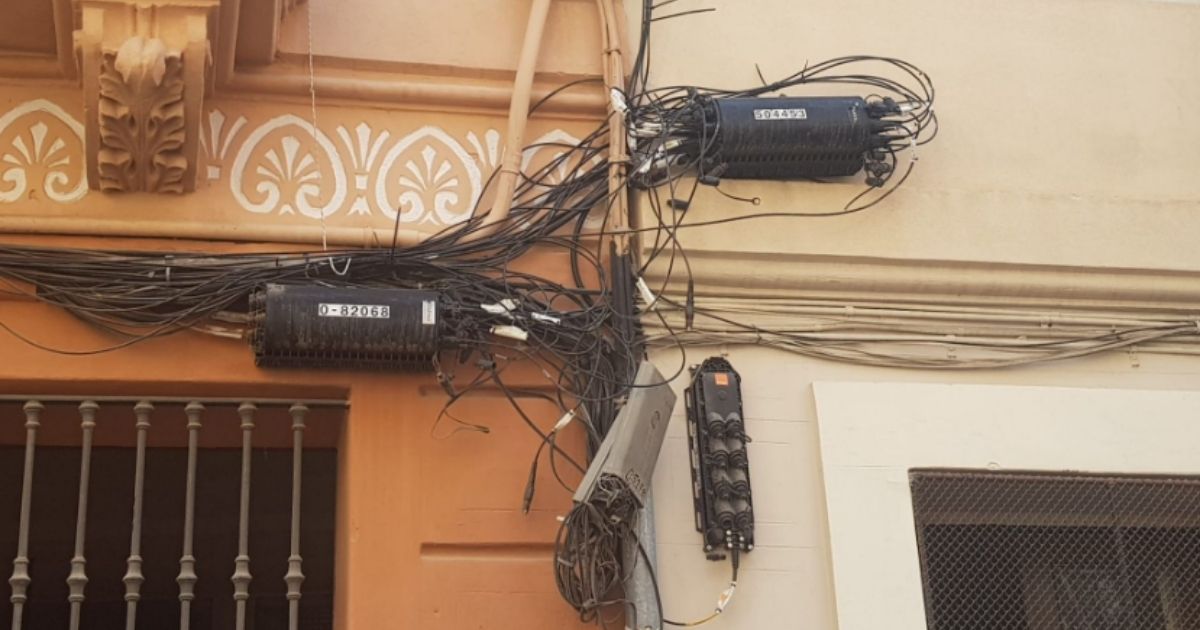
Barcelona is moving to rein in the tangle of telecoms cables hanging across building facades, turning what many residents see as a daily visual nuisance into a more serious urban policy issue. According to recent reporting, the city has issued guidance recommending that installations be rerouted and unused cabling removed, while it also prepares a rule that would make those changes compulsory rather than optional.
That matters because this is no longer just a neighbourhood complaint about messy wires. The debate has shifted towards how a city protects its streetscape, enforces standards and deals with ageing infrastructure layered over older buildings. The new Barcelona approach, as outlined in local coverage, is to move from advice to obligation.
What Barcelona is proposing
The current push appears to centre on two practical ideas: reorganising existing installations and removing cabling that is no longer in use. El Periódico reported that the new guide is not yet binding, but that the city is already working on a regulation that would oblige operators to reduce the visible cable build-up on facades.
That gives the story a stronger angle than simple urban irritation. It suggests Barcelona wants to create a clearer framework for telecoms deployment on facades instead of relying on piecemeal requests and voluntary clean-up by operators. That is an inference based on the reported shift from a non-binding guide to a compulsory rule in preparation.
Complaints have been building for years
This did not come out of nowhere. Barcelona’s ombudsman, the Síndic de Greuges, said last year that the city had wide room for improvement in sorting out telephone cabling that disfigures many facades, and called for a specific municipal regulation on telecoms deployment. The ombudsman also urged the city to create a map showing the areas worst affected by cable build-up.
The same report said the issue had triggered several complaints during 2023 and 2024, prompting an ex officio review in March 2025. That helps explain why the subject has remained live in Barcelona rather than fading into the background as a minor maintenance problem.
Older neighbourhoods are bearing the brunt
The ombudsman’s review found that the worst-hit parts of the city tend to be neighbourhoods with older buildings and poorer states of repair. In those areas, newer telecoms installations are often added on top of old phone cabling and other disused networks, creating a layered and disorderly mess on exterior walls.
That makes the issue about more than aesthetics. It also touches on inequality in the urban environment, because the most visible cable clutter appears concentrated where the building stock is older and maintenance is more fragile. That is an inference drawn from the ombudsman’s finding about the neighbourhoods with the heaviest impact.
Why the legal picture has been messy
Part of the problem lies in the legal framework. Betevé reported that Spain’s 2022 General Telecommunications Law leaves suppliers responsible for preventing disorder and neglect in installations, while limiting aerial or facade deployment to cases where underground conduits or interior building routes are not possible. The same framework also says operators must use existing installations where possible and minimise visual impact.
Even so, the Barcelona ombudsman argued that the city still has the power and the duty to protect the urban landscape, inspect installations and apply sanctions where necessary. In other words, the national law may set the broad rules, but local enforcement and design standards still matter.
From recommendation to enforcement
What changes now is that Barcelona appears ready to move beyond letters and requests. Betevé said the city had already been writing to phone operators since 2022, asking them to sort out fibre installations on facades and remove redundant connections. The new reported guide, coupled with a regulation in preparation, suggests the city wants a firmer mechanism after years of limited progress.
For residents, the issue is easy to understand. Cables hanging loose across balconies, windows and entranceways make buildings look neglected, even when the properties themselves are not. For the city, the harder question is whether it can turn a familiar visual irritant into something that operators are finally required to fix. That second point is an inference based on the reported move towards compulsory standards.
Barcelona’s next test will be enforcement
Barcelona has clearly recognised that facade cable clutter is no longer a side issue. The real test now is whether a binding rule can force change where years of complaints, letters and voluntary tidying-up have not fully worked. If the city follows through, this could become one of those small but visible policy shifts that residents notice immediately on the street.