 Lorraine Williamson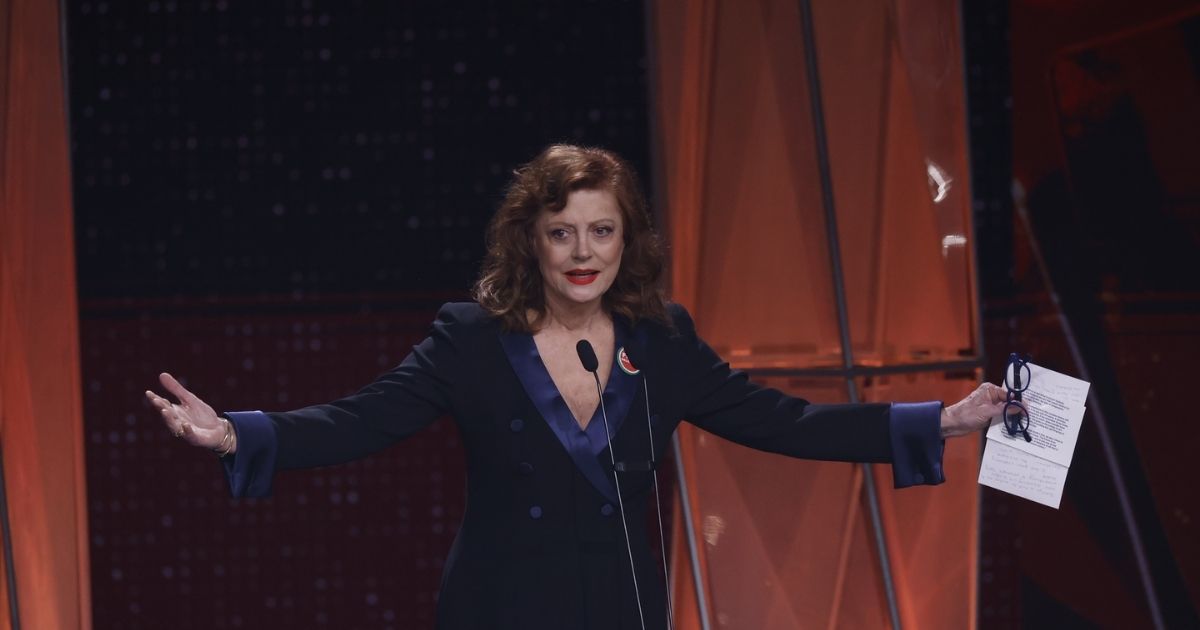
The Susan Sarandon Goya speech didn’t play like a standard thank-you. On a night built for cinema, her words landed as something closer to a statement of values — part love letter to Spain, part warning about a world sliding towards cruelty, and part rallying cry to keep speaking out
Sarandon received the Goya Internacional at the 40th Goya Awards, staged in Barcelona on 28 February 2026.
A thank-you to Spain — and a pointed line about “moral clarity”
She opened with warmth: Barcelona, art, museums, architecture, food, the people. Then she shifted. In a world she described as dominated by violence and cruelty, she said she looked to Spain and saw “moral clarity” among artists — and in politics.
Her most-quoted line praised Spain’s prime minister, Pedro Sánchez, saying his stance on issues such as Gaza made her feel “less alone”. The room responded with loud applause — the kind that signals recognition as much as agreement.
The pin that said as much as the speech
Sarandon’s message wasn’t only verbal. She wore a “Free Palestine” pin during the ceremony, an unmistakable visual cue that matched her references to Gaza and her call to raise voices, even at a cost.
In an awards season that often prefers safer symbolism, it was direct — and very hard to edit out of the story.
Howard Zinn, hope, and the refusal to look away
To frame her point, Sarandon quoted historian Howard Zinn on hope in difficult times — not as naïve optimism, but as something grounded in the repeated appearance of courage and compassion across history.
Her argument was simple: if you only train your eyes on what’s worst, you lose the energy to act. If you remember the moments when people behaved “magnificently”, you keep the spark needed to push back.
Why this landed so strongly in Spain
Spanish awards nights have increasingly become places where culture and public life collide — housing pressures, social rights, identity, and now international conflict. Barcelona, with its own long history of street politics and civic mobilisation, is a fitting stage for that overlap.
Sarandon didn’t arrive as a distant Hollywood guest. She spoke as someone who wanted Spain to know she was watching — and, in her telling, taking heart from what she sees here.
A Goya Internacional with a sharper edge
The Goya Internacional was created to honour a major international figure, and Sarandon’s acceptance speech underlined why the category can be more than ceremonial: it imports global conscience into a national celebration of film.
Whether you agreed with her politics or not, the moment was undeniably effective: it made the room react, and it made the wider conversation follow.
Expect the debate to keep running — not just about Sarandon, but about the Goyas themselves: what a film ceremony is for in 2026, and how comfortable Spain’s cultural institutions are with speeches that don’t stay politely inside the arts.