 Lorraine Williamson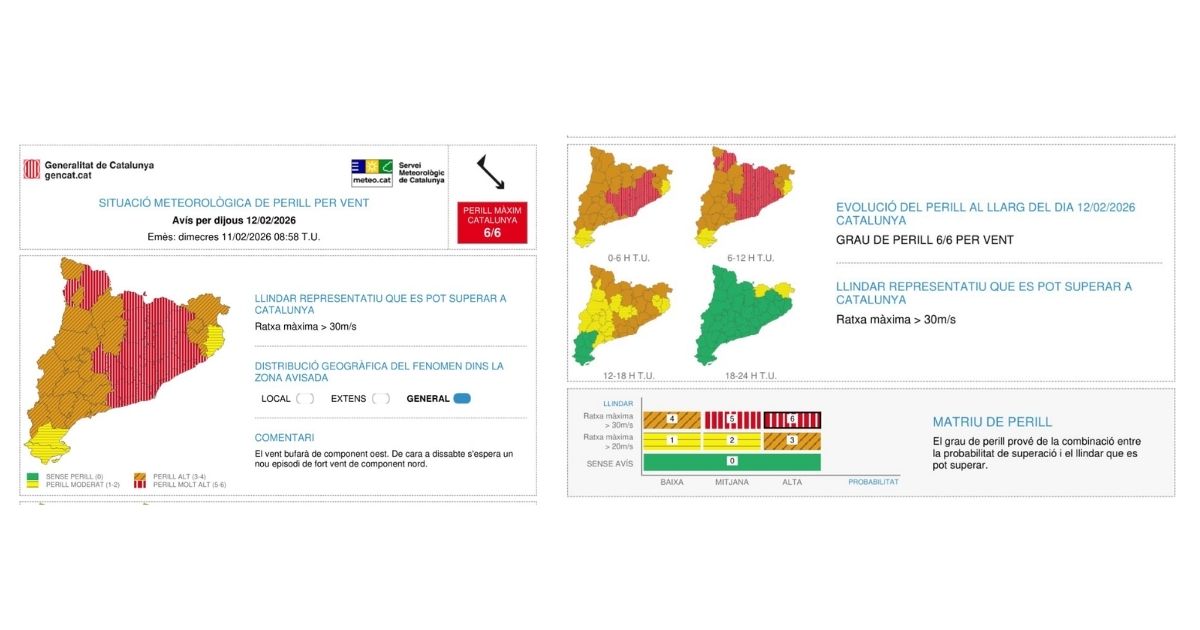
Storm Nils Spain alerts are now driving real-world disruption, not just dramatic forecasts. In Catalonia, the regional government has moved to limit activity and mobility as extreme gusts sweep across the region, while the north coast faces some of the roughest seas of the season.
The clearest message from officials is practical: avoid unnecessary travel, stay away from trees and unstable structures, and treat closures as a safety measure rather than an inconvenience.
Catalonia: schools shut, non-urgent services paused, stay-at-home advice
Catalonia’s wind plan (VENTCAT) remains in the alert phase, with forecasts of widespread gusts above 108 km/h and higher in exposed areas, including urban zones. The regional government has suspended educational and other public-facing activity as a precaution.
Local authorities have also moved quickly to close parks and restrict outdoor activity, with some public transport disruption reported as the wind peaks.
Travel knock-on: cancellations and disruption risks
Air and rail services have been affected, with cancellations and delays reported as the strongest winds move through. Reuters reported flight cancellations at Barcelona–El Prat and injuries linked to falling trees in Catalonia, underlining why authorities are urging people to limit movement.
If you’re travelling today, it’s worth checking updates before you leave — particularly for commuter rail lines in Catalonia and any coastal routes where gusts and debris can cause sudden closures.
North coast: red warnings for wind and waves
Along the Cantabrian fringe, the biggest concern is the combination of extreme winds and very high seas. Spain’s state weather agency is publishing live warnings by zone, including coastal alerts for wind and wave impacts.
Even if skies look deceptively calm inland, the coastline can be a different world in this kind of Atlantic setup. Promenades, breakwaters and sea walls are the danger points.
Why this keeps happening: the “storm train” effect
Spain has seen an unusually persistent run of Atlantic systems this season, and the pattern matters. When storms arrive back-to-back, saturated ground and weakened trees become the hidden hazard — which is why falls, collapses and blocked roads often happen after the “worst” seems to have passed.
That’s also why Storm Nils Spain alerts are being treated seriously across regions: it’s not just wind speed, but what the wind hits.
What to do today (quick, sensible precautions)
Keep it simple:
Avoid parks, wooded areas and exposed coastal walks.
Don’t park under trees, scaffolding or loose signage.
If you must drive, expect debris, sudden crosswinds and last-minute road closures.
Check official alerts for your exact province before heading out.
For official alert pages, use the Catalan government’s VENTCAT updates and AEMET’s warnings map for your area.