 Else Beekman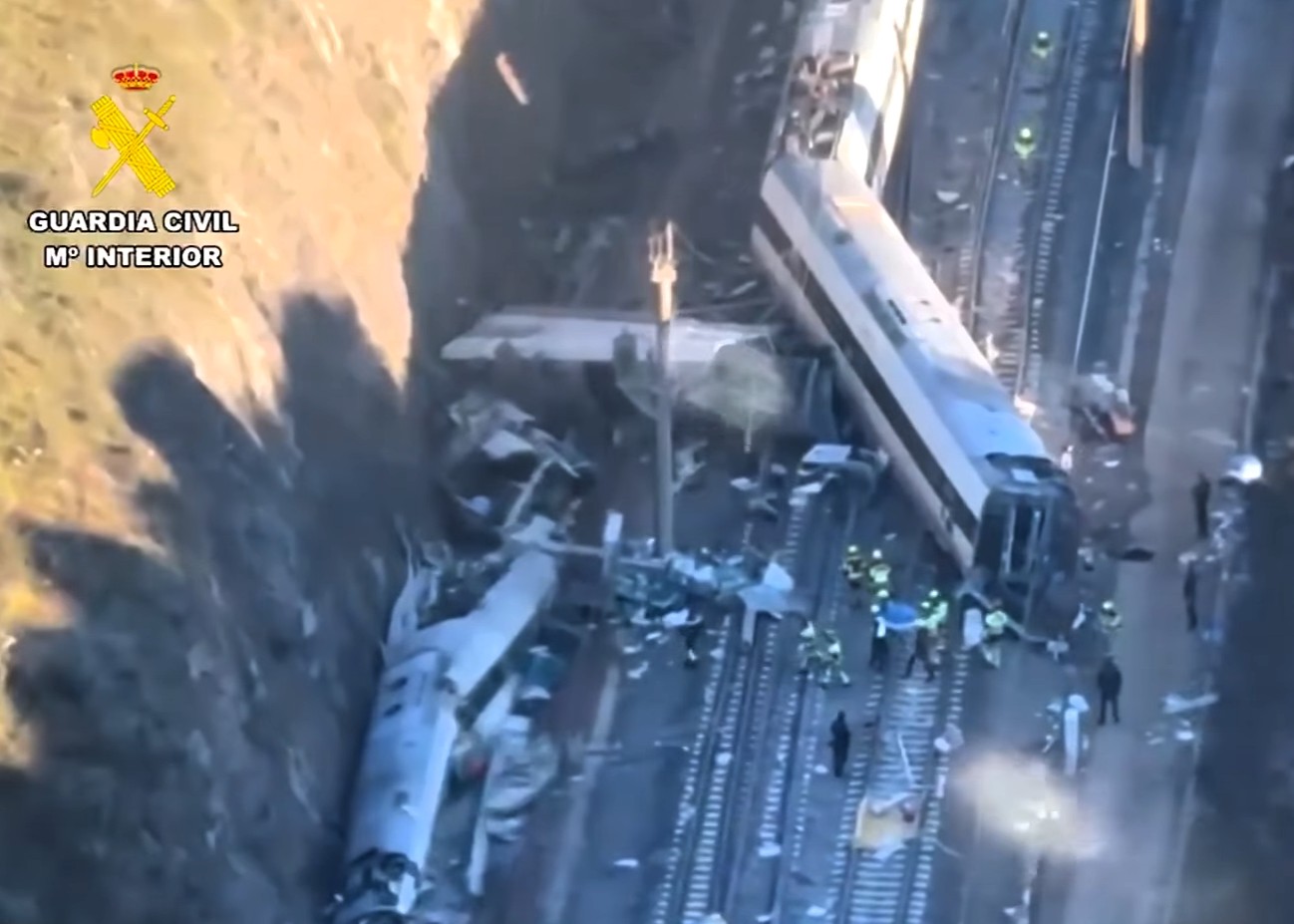
Spain’s rail tragedy near Adamuz (Córdoba) is entering a new phase: investigation, accountability and mourning. The confirmed death toll remains 45, and officials continue to urge caution around rumours while forensic identification work and technical analysis progress.
What has changed today, Friday 23 January 2026, is the strength of the leading technical hypothesis.
CIAF: rail already broken before the crash
According to El País, Spain’s rail accident investigators, the CIAF, now say their preliminary finding is that a fracture in a welded joint of the rail occurred before the Iryo train reached the location, meaning the track failure likely pre-dated the derailment.
Investigators point to uniform notches (“muescas”) found on wheels of the Iryo’s earlier cars and, crucially, similar marks on other trains that passed the same point earlier that day. That pattern could to support the hypothesis that the rail defect existed before the fatal service arrived.
Euronews, citing the CIAF update, reports that at least three trains passed over the section earlier and later showed comparable wheel marks, with timings including around 17:21, 19:01 and 19:09 (local time).
The CIAF stresses this remains provisional, pending lab work on the rail fragments and analysis of on-board recorders.
The human reality: why the second train was not immediately visible
Alongside the technical inquiry, there is growing attention on the early hours of the emergency response. Particularly for how quickly emergency services and the police understood the full severity of the Renfe Alvia.
Multiple accounts now describe a response that initially focused on the Iryo derailment. Responders and police believed there was only one affected train until Alvia passengers reached them on foot.
Telemadrid reports that a passenger from the Alvia walked along the track to alert Guardia Civil that there was another train involved. This was after the first responders had arrived at the Iryo without being aware of the Alvia’s condition.
A passenger account reported by Noticias de Álava describes the same moment starkly: “people came from the darkness”, and only then did responders grasp that another train had suffered a far more serious impact.
These are not official conclusions. They are witness-led reporting. But they are now part of the public record and are likely to shape the wider debate around communications and coordination on the night.
Verified timing: what we can say without speculation
Two timestamps are now central to the reconstruction. Adif’s published chronology places the collision at around 19:43. El País reports that although passengers on the Alvia called 112 soon after, the emergency centre only formally confirmed injured passengers on that train after a 20:00 call chain involving Renfe, roughly 17 minutes after the crash.
This is one reason why officials keep repeating the same message: the investigation is complex, and firm conclusions must come from evidence, not assumption.
Most fatalities were on the Alvia
As recovery and identification work progressed, multiple official and semi-official briefings indicated the Alvia carried the heaviest loss of life. RTVE reported a breakdown at the time the toll reached 43, stating emergency services recovered 28 bodies from the Alvia, with six from inside the Iryo, and others located on or near the track area.
That pattern is consistent with reporting that the worst damage involved Alvia coaches that ended up down an embankment after impact.
Misinformation warning
In tragedies of this magnitude, false claims spread quickly. If readers want to verify a claim before sharing it, Spain has established fact-checking organisations such as Maldita.es and Newtral.es.