 Lorraine Williamson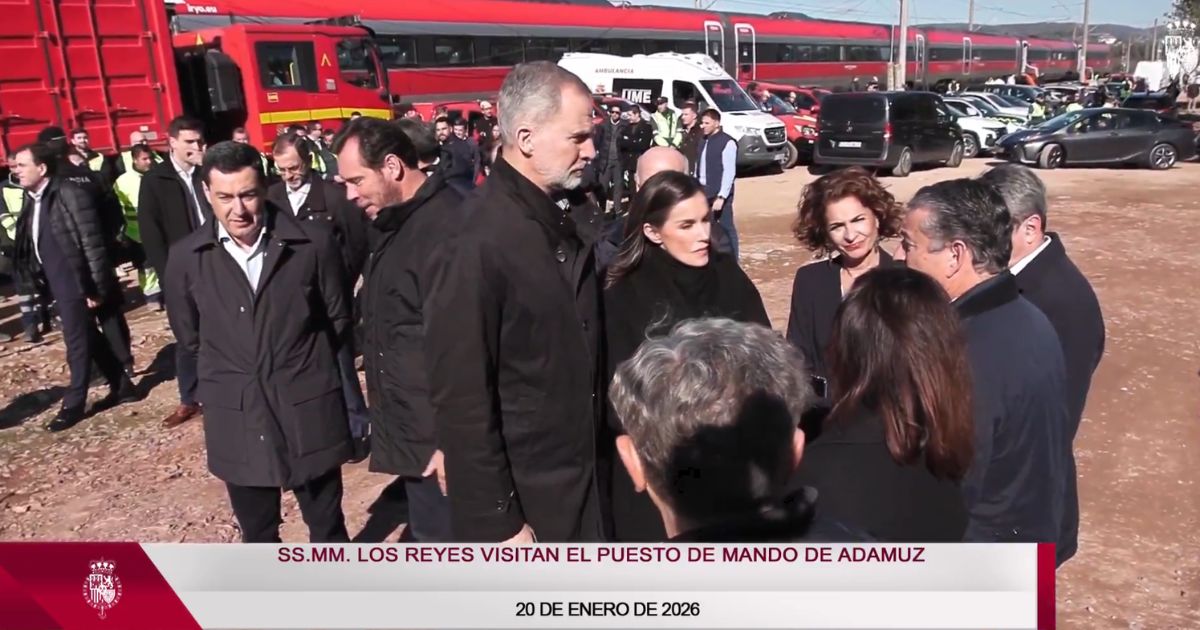
The death toll from the Adamuz (Córdoba) rail disaster has risen to 42, as forensic teams complete autopsies on the bodies recovered and investigators widen their examination of the track section where the first derailment occurred. While attention has turned to signs of damage on wheels and rails, authorities continue to stress that the cause has not been officially confirmed and the inquiry remains open.
The tragedy began on Sunday, 18 January, when an Iryo high-speed service travelling Málaga–Madrid derailed near Adamuz, invaded the adjacent track and was struck by an oncoming Renfe Alvia service (Madrid–Huelva). The collision, described by rescuers and survivors as chaotic and violent, left little time for any meaningful reaction once the first carriages left the rails.
Latest confirmed figures: 42 dead, 37 still in hospital
Spain’s Institute of Forensic Medicine in Córdoba has completed autopsies for the bodies received, and the Guardia Civil has identified a significant number of victims through fingerprint evidence as formal identification continues.
The most recent consolidated figures reported by national outlets indicate:
42 confirmed dead
37 people remain hospitalised
9 patients are in intensive care
Authorities have urged families to rely on official helplines rather than relying on social media claims, particularly regarding missing-person lists and casualty figures, which can change as identifications are confirmed.
Investigation: what officials are saying about the track evidence
Investigators are now examining whether there were signs of a developing infrastructure problem in the area before the crash.
Spain’s transport minister Óscar Puente has said marks have been found on the wheels/bogies of several Iryo carriages, and that two or three trains that passed earlier may show similar marks—a detail being analysed as part of a broader evidence set. Puente has also cautioned that it is too early to conclude what produced the marks or whether any track break was a cause or a consequence of the derailment.
Reuters has reported that authorities suspect a faulty rail joint could be involved, while also noting that experts are debating whether a broken rail was the trigger or a result of the derailment—another reason officials are warning against premature certainty.
Emergency response: “avoid the area” and keep lines clear for families
In the immediate aftermath, 112 Andalucía issued a clear message: the crash zone is for emergency services only, and the public should avoid travelling to the site so ambulances and rescue teams can move freely.
Support operations have included medical care, psychosocial assistance and family support points in major stations, with operators and public bodies repeatedly asking the public not to overwhelm emergency channels with non-urgent queries.
Official mourning in Andalucía and Madrid
Andalucía has declared official mourning from 0.00 on Tuesday, 20 January to midnight on Thursday, 22 January, with flags at half-mast on Junta de Andalucía buildings, under a decree signed by President Juan Manuel Moreno Bonilla and published in the BOJA.
In Madrid, Isabel Díaz Ayuso announced three days of official mourning (20–22 January), and on Wednesday 21 January took part in a minute’s silence outside the Real Casa de Correos in Puerta del Sol.
Across Spain, the FEMP (Spanish Federation of Municipalities and Provinces) called for a nationwide minute’s silence at 12:00 on Monday, 19 January, which many councils and institutions observed.
Practical information: who families should contact
If you are trying to locate a relative or confirm passenger status, use the official channels below.
Family helplines (published by Adif):
Renfe (families): 900 10 10 20
Iryo (families): 900 001 402
Hospital information (published by Guardia Civil):
In Andalucía: 061
Calling from outside Andalucía: 953 00 11 49
Guardia Civil offices for victim identification (DNA samples)
The Guardia Civil has opened dedicated offices for close relatives to provide documentation and, where needed, DNA samples:
Córdoba (Comandancia, Av. Medina Azahara 2)
Huelva (Comandancia, C/ Guadalcanal 1)
Málaga (Comandancia, Av. Arroyo de los Ángeles 44)
Sevilla (Zona de Andalucía, Av. de la Borbolla 8 / Av. Eritaña 1)
Madrid (Zona, C/ Batalla del Salado 32)
Renfe says it activated its Victims and Families Assistance Plan (PAVAFF), including psychological support and station-based assistance, shortly after the crash.
Travel disruption: services remain suspended and alternatives continue
Adif has said high-speed circulation between Madrid and key Andalucía destinations remains suspended “until further notice”, with updates directed to official channels and operators’ customer information feeds.
For travellers affected by cancellations and rerouting, consult:
Renfe website and @Inforenfe
Adif network status and @InfoAdif
Iryo channels (iryo.eu and @iryo)
Spain moves to curb “abuse” as passengers scramble for alternatives
A warning about rumours and fake images
In the days since Adamuz, fact-checkers have documented a wave of false claims, including allegations about deleted incident logs, fabricated messages supposedly from emergency services, and AI-generated images mislabelled as real photographs of the crash.
If you are unsure whether something is reliable, Spain’s specialist verification sites Maldita.es and Newtral.es have both published dedicated explainers about Adamuz-related misinformation and how to spot it.
Catalonia derailments (20 January)
Spain’s rail network also suffered two separate derailment incidents in Catalonia on Tuesday, 20 January, adding to public anxiety but unconnected to Adamuz. A Rodalies R4 commuter train derailed between Gelida and Sant Sadurní after a retaining wall collapsed onto the track during heavy rain, killing the driver and injuring passengers, according to emergency officials and regional reporting. Later the same day, another Rodalies incident on the Girona side of the network saw a train partially leave the track after striking an obstacle, disrupting services but reported without serious injuries.
The investigation
Spain’s rail investigators are now working through the hardest stage: matching physical evidence to a minute-by-minute reconstruction of what happened before the first carriage left the rails. Until the official inquiry reaches defensible conclusions, the most useful thing the public can do is simple—share only confirmed information, keep emergency channels clear, and allow families space to receive news through the proper routes.
Sources: Adif, Junta de Andalucia, Guardia Civil, Comunidad de Madrid