 Lorraine Williamson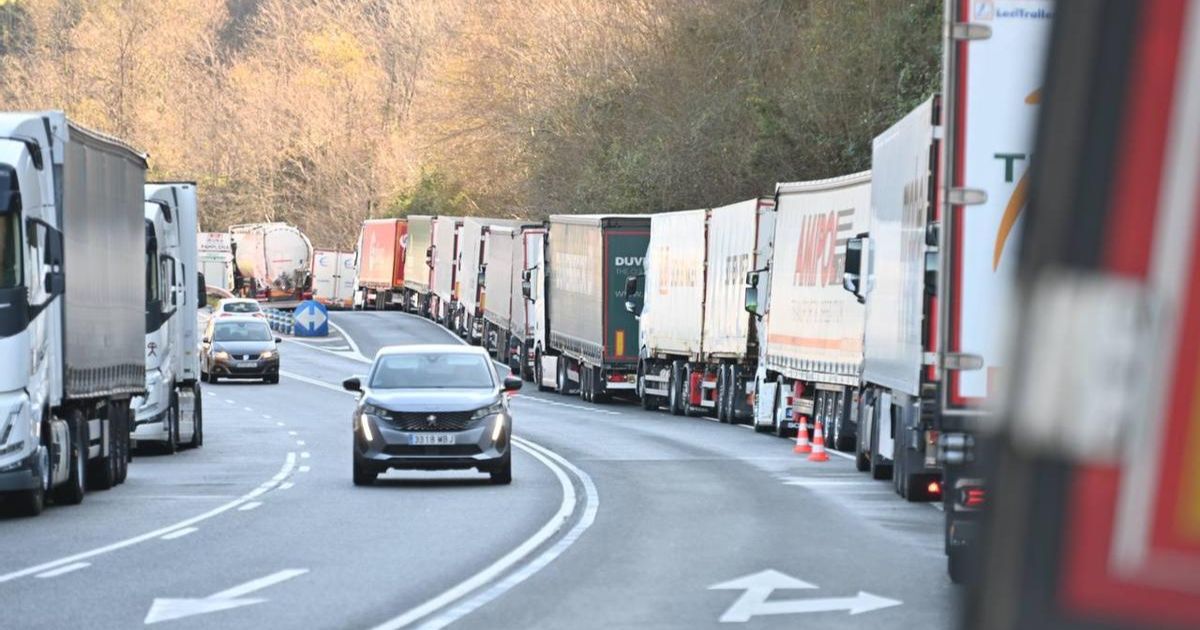
The EU Mercosur trade deal is back at the centre of Spain’s rural anger, and this time the protest is landing where it hurts most: the roads that connect Spain to the rest of Europe.
Over the weekend, farmers in Catalonia and Galicia used tractors, barricades and slow-moving convoys to disrupt key routes and access points. More actions are expected today, as Brussels faces another crucial moment in the long-running EU–Mercosur saga.
Where traffic is being hit hardest
In Catalonia, farmers have maintained blockades on several major arteries, including stretches of the AP-7 near the French border and parts of the N-II in Alt Empordà. They have also targeted the C-16, as well as access to the Port of Tarragona via the A-27, thereby choking a logistics corridor that normally operates at full capacity.
The Port of Tarragona has been a particular pressure point. One report put the impact starkly: truck movements into the port were down by around 69% during the blockade.
In Galicia, the focus has been on the A-52 near Xinzo de Limia (Ourense), where farmers cut the road in both directions from early morning, using burning rolls of hay and tyres as part of the blockade.
Why the EU Mercosur trade deal has become a flashpoint again
The argument farmers keep returning to is simple. They say EU producers face strict rules on welfare, pesticides, food safety and environmental standards, while imports from Mercosur can arrive under different conditions and at lower cost.
That fear is sharpest in sectors where price competition is brutal: beef and poultry, but also sugar and rice. For many producers, this lands on top of climbing costs for fuel, fertiliser and farm inputs, leaving little margin for another squeeze.
There is also a deeper worry in the background. Farmers’ groups in Catalonia have linked the dispute to broader EU farm policy, including pressure on the Common Agricultural Policy budget, and what they see as a widening gap between policymaking and farm reality.
Freight disruption — and the backlash from hauliers
The political fight is spilling straight into the economy. Spain’s road freight association Fenadismer said the protests had effectively “held” more than 40,000 lorries in recent days, particularly on routes that connect with Europe, and warned of heavy knock-on damage across the industry.
In other words, this is no longer just a farm story. It is a supply-chain story too.
What Brussels says it is doing to protect farming
EU institutions insist the agreement includes protection for sensitive sectors, and the safeguards question is now central.
A key point often missed in the public row: the Council has authorised the signature of both the broader EU–Mercosur Partnership Agreement and an Interim Trade Agreement designed to deliver trade benefits sooner. The trade pillar still needs European Parliament consent, and the wider partnership needs full ratification by all member states to enter into force.
On safeguards, the Council press release says temporary arrangements should allow the Commission to act quickly if imports of sensitive agricultural products disturb the market, while a dedicated safeguards regulation moves through the legislative process.
Spanish farmers face EU subsidy cuts
Mercosur pushes back on “extra” safeguard demands
Here is where the dispute turns diplomatic.
Paraguay’s foreign minister, Rubén Ramírez Lezcano, has publicly argued that the safeguard measures being debated in Europe are not part of the negotiated text — signalling that, if the EU tries to bolt them on, Mercosur may treat it as a reopening of the deal.
That matters because the Council itself says negotiations were concluded on 6 December 2024, after more than two decades, and it frames the current safeguards work as a parallel process.
Spain’s split-screen dilemma
Spain sits awkwardly in the middle.
On one side, it is a major agricultural producer with regions that depend on farming as the economic backbone. On the other hand, Madrid also sees strategic value in closer trade ties with Latin America and new opportunities for exporters in sectors like automotive, pharmaceuticals and chemicals — areas highlighted in the Council’s own summary of expected benefits.
That tension is now visible on the motorway.
The week ahead for farmers, freight and politics
With further actions expected on Monday, the immediate question is how long the road disruption can be sustained — and what the response will be from police, regional governments and the central state.
The bigger question is political. Europe is trying to land a “historic” agreement while keeping farming onside. Spain is watching, because the consequences — for producers and for supply chains — are already playing out in real time on the AP-7 and the A-52.