 Lorraine Williamson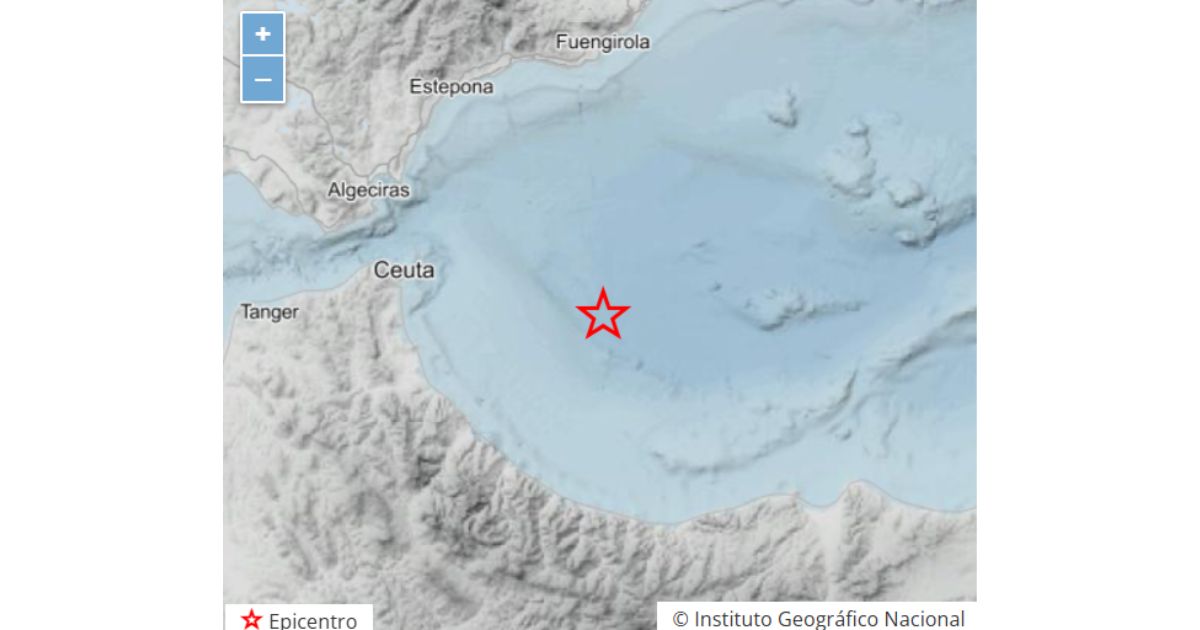
The Alboran Sea earthquake felt on Thursday evening gave plenty of people on the Costa del Sol a brief jolt — the kind that makes you look up from the sofa and wonder if a lorry has just clipped the building. Spain’s Instituto Geográfico Nacional (IGN) logged the quake at 6.32 pm (peninsular time) on 8 January 2026, offshore in “Alborán Oeste”, with a magnitude of 4.1 and no reports of damage or injuries.
IGN’s event details place the epicentre at 35.7465°N, 4.6094°W, out at sea between southern Spain and North Africa, at a calculated depth of 24 km. The maximum reported intensity was II–III, typically indicating a light to weak shake indoors, rather than anything structural.
Residents reported tremors in Málaga city and across multiple towns on the Costa del Sol, including Fuengirola, Mijas, Estepona, Rincón de la Victoria, and Torre del Mar, among others. The movement was often more noticeable in flats and on upper floors.
Were there aftershocks or damage?
As of the initial official updates, emergency services had not received reports of damage, and no casualties were reported.
That fits the usual pattern for a mid-4s (or low-4s) offshore quake: unsettling, widely felt, but unlikely to cause serious impacts unless it’s very shallow or extremely close to the coast.
Why the Alboran Sea keeps producing quakes
This corner of the western Mediterranean is one of Spain’s most seismically active zones, sitting close to the complex boundary where the African and Eurasian plates interact. That stress doesn’t build in a neat line — it releases in clusters and along multiple fault systems, which is why the region records frequent small-to-moderate events.
Earthquake alert apps: what residents should know
If you want to add a practical layer of reassurance, it’s worth knowing there are earthquake alert apps that push notifications when a tremor is detected near your location.
I received an alert on my phone last night as the quake was logged offshore. Thankfully, I didn’t feel any effects where I was — but it was a useful reminder that these apps can give you quick, location-specific information even when a quake is too mild (or too distant) to notice.
Just bear in mind that app figures can vary in the first minutes after an event, as automated systems update magnitude and depth estimates. For the most reliable final details in Spain, it’s always best to cross-check against the Instituto Geográfico Nacional (IGN).
What to do if you feel another tremor
For most Costa del Sol quakes, the practical aim is avoiding injuries from falling objects or broken glass:
Stay calm. Move away from windows and tall furniture. If you’re indoors, shelter beside a sturdy surface rather than running for stairs. Outside, keep clear of façades, balconies and power lines. Follow official guidance if anything escalates. (IGN also publishes public advice on earthquake safety.)
Sources: IGN, Malaga Hoy