 Lorraine Williamson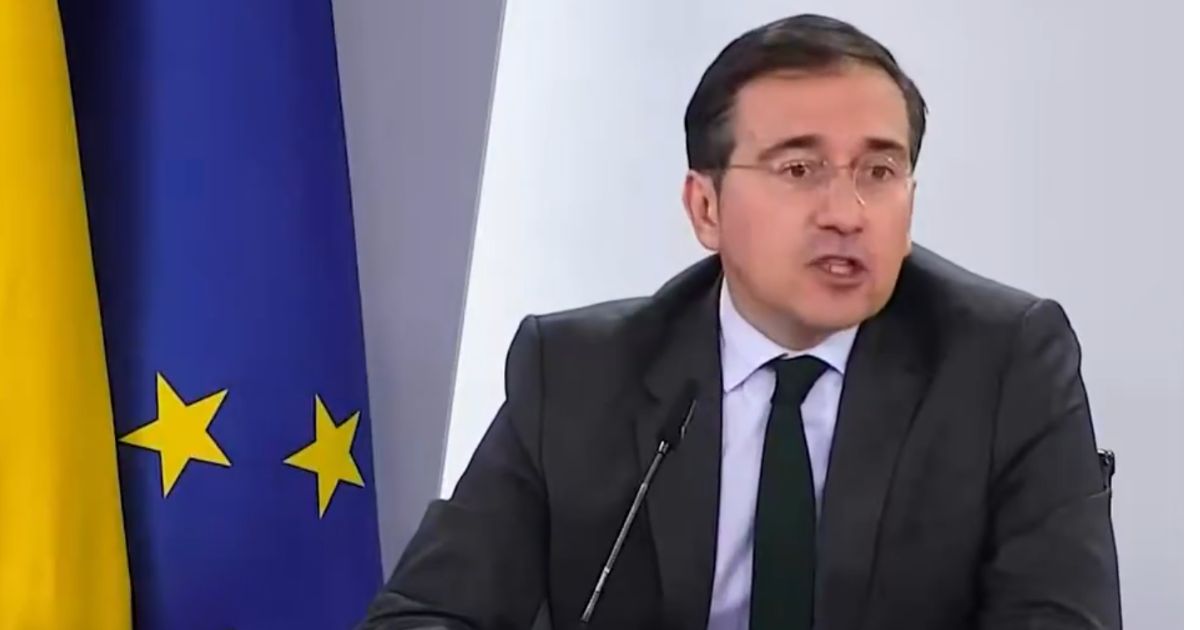
Spanish prisoners in Venezuela have moved to the top of Madrid’s agenda this week, as Spain formally urges Caracas to free detainees it says are being held arbitrarily. The demand has been delivered directly to Delcy Rodríguez, now serving as Venezuela’s interim president, in a move Spanish officials clearly hope will force a response rather than another stretch of silence.
The Spanish Foreign Ministry has confirmed that 14 Spanish nationals are currently detained in Venezuela’s prison system. Civil groups and opposition sources have put the wider figure closer to around 20, suggesting Spain may be dealing with a larger and still shifting list of cases.
A diplomatic message designed to land with impact
Spain’s request was made via a “nota verbal” — a formal diplomatic communication — signalling that Madrid wants a measurable outcome, not a photo-op. According to reports citing Foreign Ministry sources, the intention is to “insist” under the new political circumstances that Spain will not drop the issue.
José Manuel Albares, Spain’s foreign minister, has also indicated he intends to speak directly with Rodríguez. That matters because Spain is trying to keep a line open not only to the Venezuelan state, but also to the opposition, in the hope of nudging the country towards stability.
Who are the detainees Madrid is talking about?
Spain says most of those held have dual nationality and deep roots in Venezuela — people who were born there or have lived there for years. Even so, Madrid is treating them as Spanish citizens entitled to protection, including consular support and due process safeguards.
The core complaint is not just imprisonment, but the conditions around it: opaque legal processes, limited access, and prolonged detention that relatives describe as agonising. Spain’s language — “arbitrarily detained” — is a loaded diplomatic phrase, and it is being used deliberately.
The Basque case that has become a symbol
Two names keep resurfacing: José María Basoa and Andrés Martínez Adasme, detained in September 2024. Venezuelan authorities accused them of links to Spanish intelligence and of plotting an attack on Nicolás Maduro — claims Spain disputes, with reports stating they were presented “without evidence”.
Their case has become politically sensitive in Spain, not least because it is part of a broader deterioration in relations following Venezuela’s post-election tensions and the arrival of opposition figure Edmundo González Urrutia in Spain as a political refugee, according to Euronews’ reporting.
Why Madrid is making this push now
Timing is everything. Rodríguez has stepped in after the US capture and transfer of Nicolás Maduro, a dramatic escalation that has triggered legal and diplomatic shockwaves well beyond Caracas. Reuters reports Maduro has already appeared in a US courtroom, with a major legal battle looming over immunity and the circumstances of his capture.
Spain has been publicly critical of the US intervention. Still, it is also moving fast to protect its own citizens — and to do so while a new power centre in Caracas is still consolidating.
What leverage does Spain actually have?
Spain’s influence is not only political. Officials point to a large Spanish community in Venezuela — around 150,000 people — alongside business ties that Madrid will be reluctant to gamble with lightly. That mix of interests is precisely why Spain is trying the diplomatic route first, while also working with EU partners and human-rights actors.
For ordinary families, though, leverage is measured in something simpler: whether their relatives come home.
A warning for anyone with ties to Venezuela
This new diplomatic push lands against a background of stark official caution. Spain’s Foreign Ministry travel advice pages for Venezuela remain highly restrictive, and recent reporting has highlighted ongoing instability and disruption to travel links.
For Spanish residents with family there, the message is blunt: if detention happens, help can be limited and slow, which is why Madrid is trying to force clarity now.
Where this goes next
Spain has put its demand in writing and aimed it at the top of Venezuela’s interim leadership. The test is whether Rodríguez’s government treats the detainees as bargaining chips — or chooses a confidence-building release that would reset the tone overnight.
Either way, Madrid has now drawn a public line: Spanish prisoners in Venezuela are no longer a consular footnote. They are a diplomatic priority.
Sources: La Moncloa, Ministry of Foreign Affairs, EFE, Reuters