 Lorraine Williamson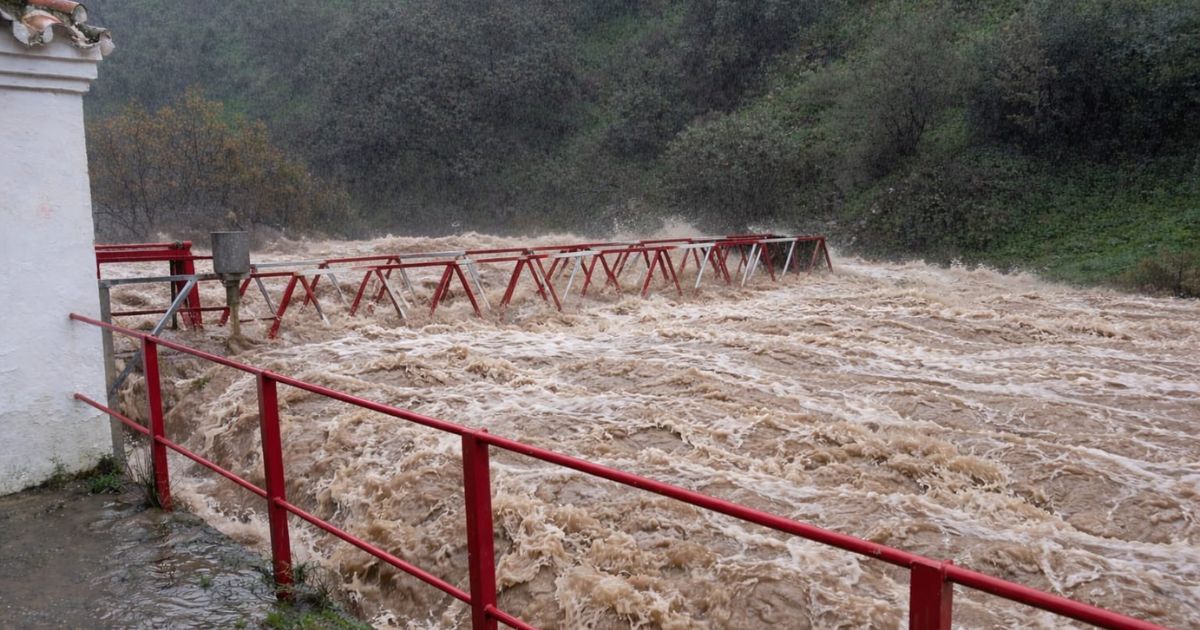
Storm Francis issued red alerts across southern Spain on Sunday, prompting emergency messages to be sent to phones and leaving a trail of flooded streets, closed roads, and rapidly rising rivers in Málaga and Cádiz.
Civil Protection sent an ES-Alert to residents in dozens of municipalities as AEMET raised the rain warning to red in parts of Málaga province. Then, a second message followed at 10.23 pm, repeating the same blunt advice: avoid unnecessary journeys, do not cross flood zones, and keep away from riverbeds and channels.
A region on standby, and a plan still active
As conditions worsened, the Junta kept Andalucía’s PERI flood-risk plan active at emergency phase (operational situation 1). In a late update, Antonio Sanz — the Andalucian minister for health, the presidency and emergencies — stated that 112 Andalucía had handled 261 incidents, most of which occurred in Cádiz and Málaga, and confirmed preventive evacuations in both provinces.
In Estación de Cártama, around 30 people were moved out as water levels surged. And in Jimena de la Frontera, 17 people were also evacuated as the storm’s centre of gravity shifted towards the Campo de Gibraltar.

@antoniosanz
Cádiz: Jimena hit hardest as rivers break their banks
In Cádiz province, Jimena de la Frontera became one of the storm’s most extreme points. Local reporting put rainfall at 257 litres per square metre between midnight and 7.00 pm, with the sharpest downpour concentrated in a single hour around midday.
The Hozgarganta River overflowed, leaving the area temporarily cut off and turning routine travel into a risk. Across the Campo de Gibraltar, the situation stayed tense as authorities watched river levels and runoff zones.
Overnight, emergency services also ordered a preventive evacuation of 470 homes downstream of the Guadarranque reservoir, affecting parts of San Roque and Los Barrios.
Those evacuated from homes in Jimena de la Frontera and those downstream of the Guadarranque reservoir have now been authorised to return home.
Málaga: road closures, flooding and damaged infrastructure
In Málaga province, the storm hit both the coast and the interior. Rivers rose sharply in towns such as Fuengirola, while inland routes became impassable as floodwater, mud and debris spread across roads.
Among the most serious incidents, local reports described closures on the A-7059 near Alhaurín el Grande and a red-level alert for the MA-5403 near Ardales. Other towns, including Casarabonela, Tolox, Monda and the Serranía de Ronda, reported temporary closures linked to flooding and fallen trees.
In Coín, a large sinkhole opened on the road towards Mijas, forcing restrictions and slowing traffic to a crawl.
Closures and cancellations: when weather rewrites the diary
The impact was not just physical. In Málaga city, authorities cancelled Epiphany-related street events and shut municipal cultural and sports facilities as a precaution.
Retail also took the hint. La Cañada (Marbella) and Plaza Mayor (Málaga) closed on what would normally be a busy Sunday ahead of Three Kings’ Day, reflecting how seriously the red alert was being treated.
Sunday night safety message
The messages sent through ES-Alert and emergency channels urged residents to stay off the roads unless essential, avoid flood-prone areas, and never attempt to cross water on a road or low bridge. People in flood-risk zones were told to move to higher ground or an upper floor, and to follow instructions from 112.

First and second ES-Alerts
Why the risk remains after the rain
Even if the rain has stopped, Antonio Sanz warned that the risk has not disappeared. Runoff remains intense, he said, and water is still feeding into reservoirs and river channels. For that reason, crossing riverbeds, rivers, streams and low-water crossings remains prohibited, even in dry spells. Sanz also pointed to the scale of the storm, saying the Guadarranque reservoir took in 23 hm³ in 24 hours — roughly five months of water consumption for the Campo de Gibraltar — volumes he said explain the preventive evacuations in San Roque and Los Barrios.
Today, the risk is less about one dramatic downpour and more about what happens next. Rivers can rise downstream long after the heaviest rain falls, and road conditions can change quickly where the ground is saturated.
Officials are expected to keep updating river, reservoir and travel conditions through the day. If you live near a riverbed, a crossing point, or a known flood zone, it’s a day for checking alerts before moving around.