 Lorraine Williamson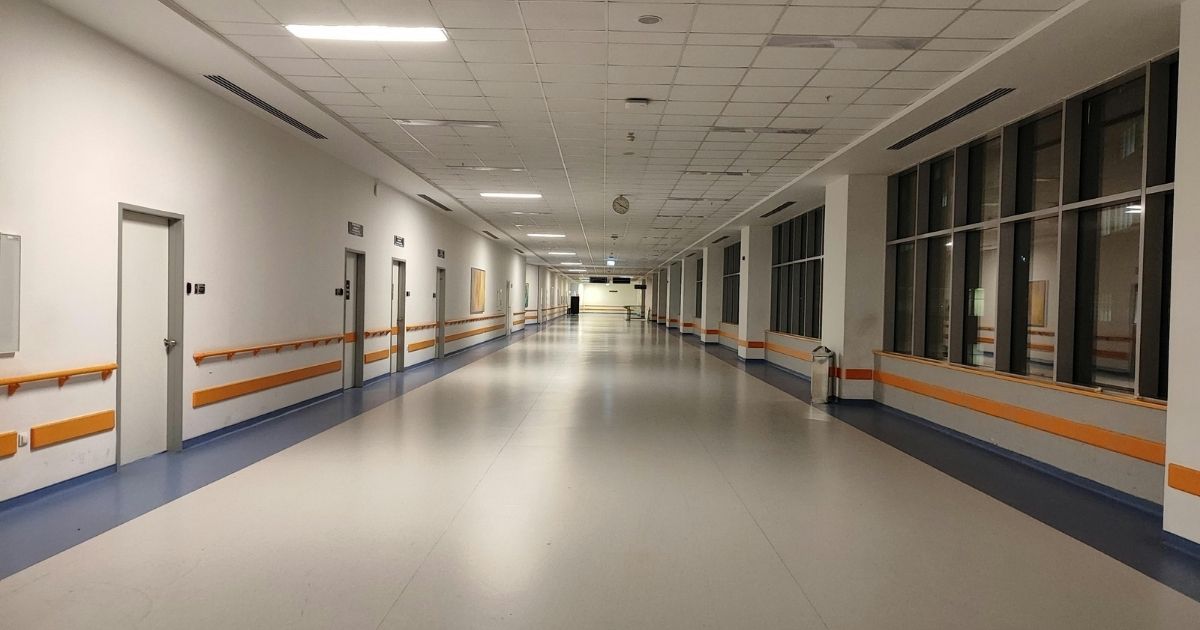
Hospitals across Spain remain under intense pressure as the national doctors’ strike stretches into a third consecutive day, with little sign of compromise. The doctors’ strike’s latest developments reveal a dispute that now runs deeper than pay or staffing levels: it has become a fight over professional identity, workload, and the long-term future of public healthcare.
This week’s stoppages have shut down operating theatres, disrupted outpatient services and forced thousands of patients into uncertainty — including my own hospital appointment, which collapsed without warning. The strike has become one of the most widely supported medical walkouts in Spain for over a decade.
A system stretched to breaking point
Trade unions describe participation levels of 80–90%, a figure sharply higher than early estimates from regional health authorities. The impact is visible throughout the country. Surgeries have been cancelled at short notice. Diagnostic tests postponed. Routine consultations suspended.
The stoppages follow years of growing pressure inside Spain’s public health system. Doctors argue the Government’s proposed reform of the Estatuto Marco — the law that governs all public healthcare workers — fails to recognise the realities of their profession.
The statute, unchanged since 2003, currently groups doctors with all other clinical and administrative staff. For medical unions, that is the heart of the problem.
Why doctors are demanding a dedicated statute
At the centre of the dispute lies a simple demand: a separate Estatuto Marco specifically for doctors. Their argument rests on three pillars:
Excessive working weeks that regularly reach 60–70 hours, driven by relentless “guardias” (on-call shifts).
Weak career stability, with contract structures that do not reflect years of specialist training.
Lack of professional recognition that leaves doctors feeling increasingly invisible inside the broader civil-service system.
Union leaders insist the strike is not about salary but about dignity. They want the law to explicitly define medical responsibilities and safeguard the profession from further erosion. Without a dedicated statute, they warn, Spain risks undermining the very foundation of its healthcare workforce.
Government stands firm as tension rises
Despite the scale of the mobilisation, the Ministry of Health has refused to withdraw or redraft its proposed Estatuto Marco reform. Officials say many of the changes doctors seek fall outside their legal remit, an argument that has further widened the gulf between both sides.
Talks have been scheduled, but doctors fear they will amount to little more than a symbolic gesture. With trust severely strained, there is little expectation of a swift resolution.
Hospitals feel the strain — and so do patients
Across Spain, treatment backlogs are already building. Elective surgeries have been postponed indefinitely. Waiting rooms sit half-empty, not because demand has eased but because specialist consultations aren’t taking place.
Doctors stress that essential services and emergency care remain running under mandatory minimum services. Yet even in hospitals where disruption is being carefully managed, the emotional toll on patients is unmistakable.
I experienced this first-hand today.
I arrived at the hospital for a long-awaited scan — one that had taken time and effort to secure. I checked in, took my place, and was moments from being seen when staff informed me that my doctor was on strike. There was nothing they could do. I would receive a phone call “in due course” to rearrange. That could mean weeks. Possibly months.
Walking back out of the hospital, I felt the same mixture of frustration and helplessness that thousands of patients are quietly absorbing this week.
Why doctors say the strike is about the future, not the present
Despite the disruption, striking doctors argue their actions are a defence of Spain’s public health system, not an attack on it. They warn that without structural reform, unsafe workloads and declining morale will drive more professionals to leave the public sector — or the country altogether.
Their message is clear: a healthcare system cannot remain world-class if its doctors are stretched to breaking point.
Agreement unlikely
With pressure mounting and negotiations clouded by distrust, a rapid agreement appears unlikely. If talks fail to progress, unions may escalate their action. Regions could face weeks of reduced medical activity. Winter pressures will make that even harder to absorb.
For patients, the uncertainty is immediate. For doctors, the stakes are existential. And for Spain’s healthcare system, the coming weeks will reveal whether meaningful reform is possible — or whether this dispute signals a deeper crisis in the making.
The wider implications for patients and the system
The doctors’ strike latest wave of industrial action, serves as a warning to policymakers: reform cannot be delayed indefinitely. Whether the answer lies in a dedicated statute or a broader restructuring, the message from hospitals is undeniable.
The system is at a crossroads. How Spain responds now will shape the quality of healthcare for years to come.
Source: 20 Minutos