 Lorraine Williamson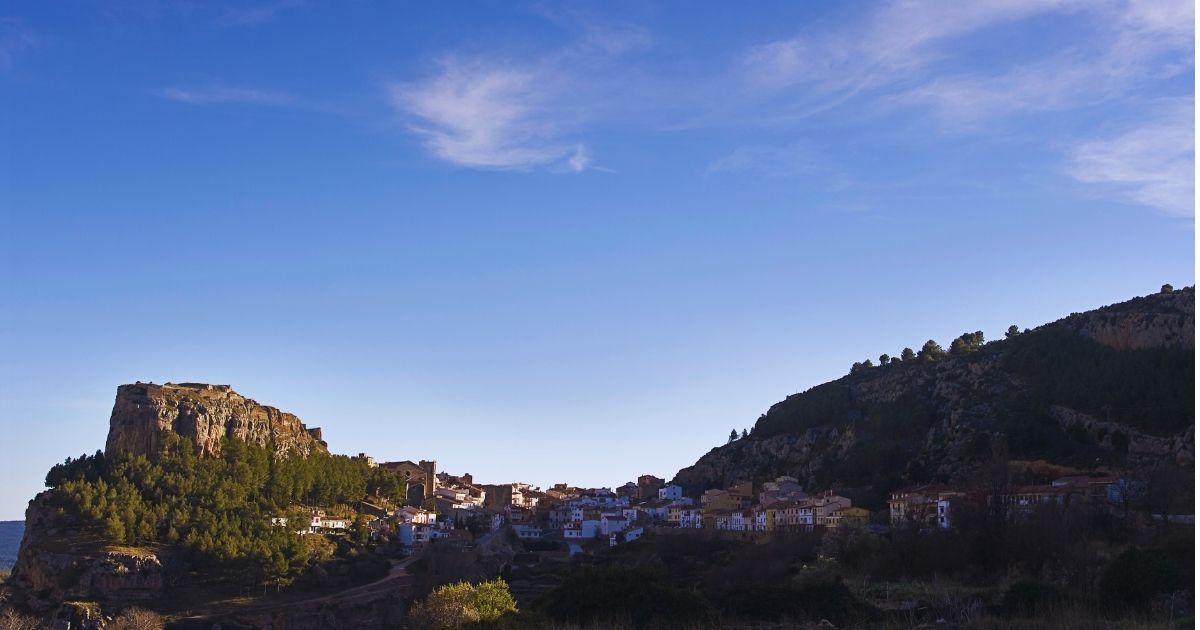
Spain’s quieter corners rarely compete with the skylines of Madrid or Barcelona. Yet deep in the hills and high plains, far from the rhythm of the coasts, lie small communities where life unfolds at a slower pace. These are places anchored in centuries-old traditions, shaped by stone, weather and memory – the settings championed by Los Pueblos Más Bonitos de España, the association that protects villages of exceptional cultural and natural value.
At the end of November, the organisation confirmed four new additions for 2026, bringing the national tally to 126 recognised villages. This year’s new names – Santa Gadea del Cid (Castilla y León), Alpuente (Valencia), Oseira (Galicia) and Vilanova dos Infantes (Galicia) – offer four distinct worlds: medieval fortresses, fossil-rich mountains, monastic grandeur and enduring Galician traditions.
A growing movement to protect rural heritage
Founded in 2011, Los Pueblos Más Bonitos de España emerged at a moment when rural depopulation and shrinking services threatened many remote communities. The association introduced strict criteria for entry: architectural coherence, historical significance, preserved landscapes and demonstrable commitment to heritage conservation.
Its early icons – Albarracín in Aragón, Pampaneira in Granada’s Alpujarra, Peñíscola on the Castellón coast – helped transform perceptions of rural Spain. The network has since become a vital tool for sustainable tourism, ensuring visitor numbers grow in a controlled, manageable way while giving small villages the visibility they often lack.
During the organisation’s XIII National Assembly in Santillana del Mar, the association confirmed the four new entries after what it described as a “rigorous quality process”. In a message shared on X, Los Pueblos Más Bonitos de España celebrated the announcement, noting that “excellence always comes before quantity”. The post highlighted the growing diversity of the network and the cultural richness behind the new choices, inviting readers to discover “more beauty, more heritage, more Spain”.
Santa Gadea del Cid: a medieval outpost above the Ebro Valley
 In northern Burgos, Santa Gadea del Cid rises gently from the hills overlooking the Ebro Valley. The village today numbers around 160 inhabitants, yet its streets feel like a preserved fragment of the Middle Ages. At its highest point stands the 14th-century church-fortress of Santa María, a monumental structure that once defended the frontier and still dominates the skyline.
The Calle Mayor is lined with noble houses bearing coats of arms and carved wooden balconies. Two surviving gates and the remnants of an ancient castle recall centuries of border disputes and shifting alliances. From the hills, the landscape unfolds in slow waves – a reminder of how closely history and geography intertwine in this part of Castilla y León.
Alpuente: fossils, fortresses and the wild Serra

@19Tarrestnom65
High in the Serranía de Valencia, Alpuente offers an unexpected mix of medieval architecture and geological drama. Its old quarter, perched on a rocky outcrop, still shows the defensive lines of the former Castillo del Poyo and the remains of town walls that once guarded this strategic settlement.
Yet the village’s fame has grown thanks to what lies beneath its soil. The Palaeontological Museum showcases fossilised dinosaur footprints discovered in the surrounding terrain, linking the modern village to a prehistoric past. Nearby, the Ethnological Museum, set inside a 14th-century communal bread oven, offers a window into rural life across generations.
Churches, towers and the elegant Aquaducto de los Arcos form a patchwork of heritage sites. Together they show how history, landscape and science converge in this corner of inland Valencia.
Dinosaur footprints in Asturias
Oseira: monastic grandeur in the heart of Galicia

Lameiro / Wikimedia Commons, CC-BY-SA 2.0
The village of Oseira in Ourense is shaped almost entirely by one extraordinary landmark: the Monasterio de Santa María de Oseira, a vast Cistercian complex built between the 12th and 16th centuries. Known as the “Galician Escorial”, its granite walls, cloisters and austere architecture give it an almost otherworldly presence.
A community of monks still lives here, continuing a tradition of silent prayer and agricultural work that defines the monastery’s identity. Remarkably, despite a devastating fire in 1552, the main church survived intact.
Outside the monastery grounds, Oseira is a quiet settlement bordered by chestnut woods, streams and steep hillsides. Its location along the Vía de la Plata, one of the historic Camino routes to Santiago, makes it a peaceful stop for walkers seeking rest rather than crowds.
Vilanova dos Infantes: towers, rituals and Galician memory

@DarioAlvarez
Close to Celanova, Vilanova dos Infantes feels like a village built around a symbol: the imposing Torre da Homenaxe, a medieval watchtower rising above terracotta roofs. It is the most visible reminder of the area’s strategic past, when fortifications shaped daily life.
But Vilanova’s cultural identity comes most vividly alive each 15 September, when locals celebrate the romería of the Virxe do Cristal. The tiny relic, said to have been found by a farmer four centuries ago, continues to gather pilgrims from across Galicia. The village’s permanent exhibition further explores the region’s history and traditions, linking local stories to the broader landscape of Ourense.
Streets lined with modest houses, shaded squares and a gentle pace of life make Vilanova one of rural Galicia’s most atmospheric communities.
Why these four villages matter
Spain’s newest additions highlight the diversity of rural beauty: defensive medieval settlements, mountain villages shaped by geology, monastic centres surrounded by forests, and communities built around spiritual traditions. Each brings something distinct to the national map.
For travellers, the 2026 update opens four new doors into the country’s lesser-known stories. For the villages themselves, the recognition can be transformative – boosting year-round tourism, safeguarding heritage and supporting local economies without altering their character.
Rural Spain’s expanding story
The list of Spain’s most beautiful villages now reflects a broader trend: renewed interest in the quieter, older rhythms of the country. As urban life grows more crowded and coastal landscapes more commercial, the appeal of mountain paths, silent monasteries and medieval squares only strengthens.
Santa Gadea del Cid, Alpuente, Oseira and Vilanova dos Infantes join not just a list, but a movement – one that continues to redefine how Spain understands and preserves its rural identity.
Source: Cadena Ser