 Lorraine Williamson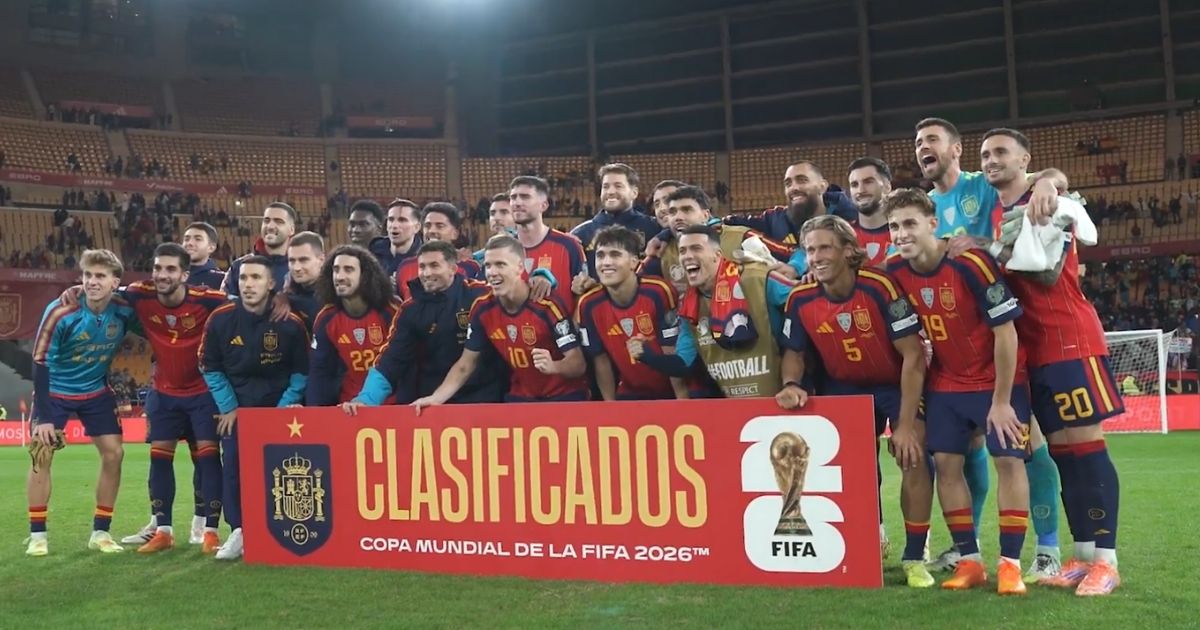
Football’s biggest stage returns in 2026 with a scope that feels closer to a continental festival than a single-nation event. For the first time, the tournament stretches across three North American hosts — the USA, Canada, and Mexico — and expands to 48 competing nations, creating the most geographically ambitious World Cup yet.
The shift lands at a moment when the sport’s audience is broader, younger and more global than ever. For fans from Spain to Scotland, England, the US and Canada, the next edition promises a familiar summer ritual reborn with fresh energy.
A tournament spanning three nations
North America will share everything from infrastructure to fan zones, but each host nation has its headline moment.
Mexico City’s iconic stadium — long woven into football folklore — will stage the opening match on 11 June. Just over a month later, the tournament will close on 19 July in New Jersey, near New York City, a host region chosen for its scale, global connectivity and commercial pull.
It marks football’s return to its traditional June–July calendar after Qatar’s winter edition, restoring the rhythm that fans have embraced for generations.
Washington DC takes centre stage for the draw
Before a ball is kicked, global attention will fall on Washington DC, where the Final Draw will take place on 5 December inside the Kennedy Centre.
With the tournament now supersized, the ceremony carries even more weight. The three hosts already know their opening positions — Mexico in A1, Canada in B1, and the USA in D1 — but the rest remains open. Fans will learn the group-stage fixtures in a draw set to start at 12 noon local time (18:00 CET).
Who’s in? A global snapshot of the qualified teams
Qualification is entering its final stretch, with 42 teams already confirmed. The list is a showcase of global variety:
Co-hosts: Canada, Mexico, USA
Europe (UEFA): Austria, Belgium, Croatia, England, France, Germany, Netherlands, Norway, Portugal, Scotland, Spain, Switzerland
South America (CONMEBOL): Argentina, Brazil, Colombia, Ecuador, Paraguay, Uruguay
Africa (CAF): Algeria, Cabo Verde, Côte d’Ivoire, Egypt, Ghana, Morocco, Senegal, South Africa, Tunisia
Asia (AFC): Australia, Iran, Japan, Jordan, Korea Republic, Qatar, Saudi Arabia, Uzbekistan
Concacaf qualifiers: Curaçao, Haiti, Panama
Oceania (OFC): New Zealand
For supporters in Scotland, England, Spain and across the English-speaking world, this edition offers both familiar giants and rising contenders, alongside the historical backdrop of North America’s growing football culture.
How Spain sealed their spot: calm heads in a tense finish
Spain head to North America after securing their 13th consecutive World Cup — almost half a century of uninterrupted appearances.
Their qualification group was marked by authority. Five wins and one draw, 21 goals scored, and only 2 conceded underline a campaign built on control and fluid attacking play.
The decisive evening came against Turkey, where Spain wore their new strip but looked anything but comfortable. An early goal hinted at a routine night, yet Turkey struck before half-time and stunned Spain again seconds into the second half.
Spain forced their way back to 2–2 and thought they had snatched victory in stoppage time, only for VAR to intervene for offside. The draw, however, did enough. La Roja booked their ticket with a performance that mixed frustration, resilience and late pressure — qualities they have often brought into summer tournaments with effect.
England’s assured march through qualification
England entered their final match with a rare luxury: a perfect record, no goals conceded, and the confidence of a side in complete command.
Albania travelled to England still hoping to disrupt the group order, but the script never shifted. Harry Kane struck twice, maintaining England’s trend of early control and clinical finishing. Albania never found a reply.
Across the campaign, England looked composed, structured and more balanced than in recent years — attributes that will give supporters in the UK, US and Canada reason to believe 2026 could bring a run deep into the knockout stages.
Scotland’s long-awaited return: Hampden’s night of noise
For Scotland, qualification came with the drama, defiance and raw emotion that has long defined the Tartan Army. After 28 years without reaching a World Cup, everything hinged on a home match against Denmark, group leaders and strong favourites.
Yet within minutes, Hampden Park erupted. Scott McTominay launched into a spectacular overhead kick, giving Scotland an early lead that set the tone for a fierce, absorbing contest.
Denmark clawed back a penalty, but Lawrence Shankland restored Scotland’s advantage. With eight minutes left, Denmark equalised again, threatening to rip up Scotland’s dream in cruel fashion.
But the Scots were not finished. In added time, Tierney and McLean each struck decisive blows, sealing a 4–2 victory that felt seismic. Hampden shook as “No Scotland, No Party” rang out — not as a slogan, but as a release of nearly three decades of waiting.
North America prepares for a global summer
From Vancouver to Monterrey and Miami to Guadalajara, the 2026 hosts face a logistical and cultural challenge unlike anything seen in football. Stadiums are being adapted for enormous crowds, airports are expanding their summer schedules, and cities are preparing to welcome millions.
For fans travelling from Spain, Scotland, England, the US or Canada, this will be a World Cup where distances are vast, landscapes shift dramatically, and football becomes a journey across three nations rather than a single host.
2030 FIFA World Cup
A World Cup built for a changing game
The 2026 tournament feels like a pivot point — not just for its scale, but for what it signals. Football is expanding geographically, culturally and digitally. Younger audiences consume matches differently. Major cities are becoming hubs for global fan culture. And new contenders from Asia, Africa and North America are narrowing the gap with traditional powerhouses.
For Spain, Scotland and England, the next chapter starts now. For the hosts, the task is to create an event that reflects the modern game. And for fans across the world, the countdown to a landmark summer is officially underway.
Source: FIFA