 Lorraine Williamson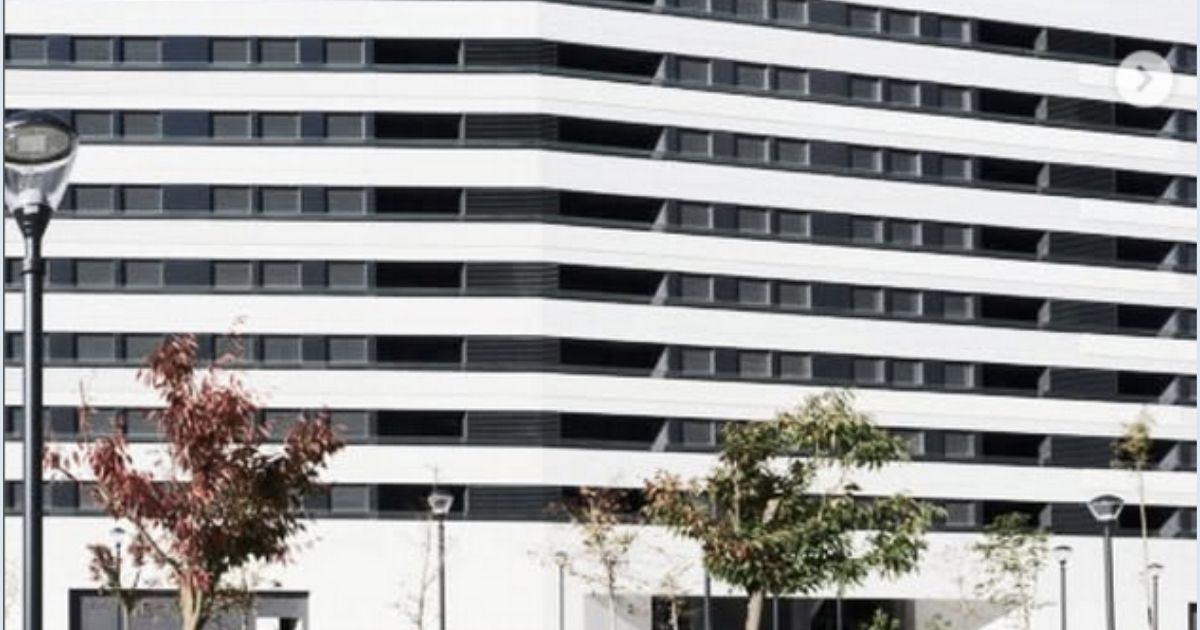
Across Spain’s cities, a new style of housing is spreading fast. Known as bloques cebra—or zebra blocks—these black-and-white apartment complexes are instantly recognisable, rising on the edges of Madrid, Barcelona, Valencia, and beyond. To some, they offer a practical answer to the housing shortage. To others, they represent the creeping uniformity of profit-driven urban design.
Their defining feature is their bold black and white façades, starkly striped like a zebra crossing. The architecture is angular, minimalist, and repetitive, often created from template designs. Built in large numbers and at speed, they have become the hallmark of new residential districts on city outskirts, where land is cheaper and expansion easier.
The apartments often boast modern comforts—swimming pools, underfloor heating, and spacious bathrooms. Yet from the street, the uniformity is striking. Row upon row of almost identical blocks give little away about the individuality of those who live within.
Fast food real estate?
Architects critical of the trend have dubbed these buildings “fast food real estate”. They argue that efficiency has triumphed over character, with developments that turn their backs on the street and create isolated, inward-looking communities. The fear is that this approach will gradually erase the unique character of Spain’s cities, replacing it with monotone estates lacking soul or identity.
The Instagram account @bloque_cebra has captured the mood among young architects. It documents these projects with a mix of fascination and alarm, framing them as a symptom of a housing market prioritising profit margins over liveability. “It feels like we’re getting used to something that doesn’t sit right,” one post reflects—a quiet warning about the direction of Spanish urbanism.
Municipalities defend efficiency
Not everyone sees the stripes as a problem. Developers highlight the affordability of the properties, while local councils point to their high energy efficiency standards and appeal to first-time buyers. At a time when Spain faces a housing crunch, bloques cebra provide a quick pipeline of new homes.
Yet critics warn of long-term costs. While the interiors are often well-equipped, the exteriors typically lack shops, plazas, or communal areas. These developments risk becoming islands: self-contained but disconnected, where social ties struggle to take root.
Beyond the housing crisis
The debate over zebra blocks reveals a broader tension in Spanish urban planning. Cities are under pressure to deliver affordable housing quickly. But speed and scale often come at the expense of character and cohesion.
As more Spaniards call for liveable cities—walkable streets, mixed-use spaces, and designs that foster community—the question grows sharper: will these monochrome towers help solve the crisis, or will they deepen it by creating soulless suburbs?
The future of Spain’s urban landscape
Black and white housing blocks are unlikely to disappear any time soon. They sell, they build quickly, and they tick boxes for efficiency. But their rapid rise forces Spain to confront a bigger choice: should housing policy focus only on numbers, or should it also protect the texture and diversity of urban life?
As the striped silhouettes multiply across skylines, the answer will shape not only Spain’s housing market but also the identity of its cities for generations to come.
Source: El País